

cla-web

In Stock

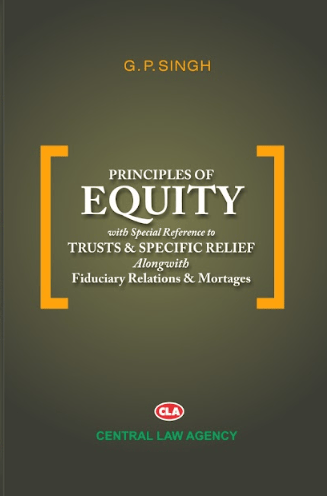
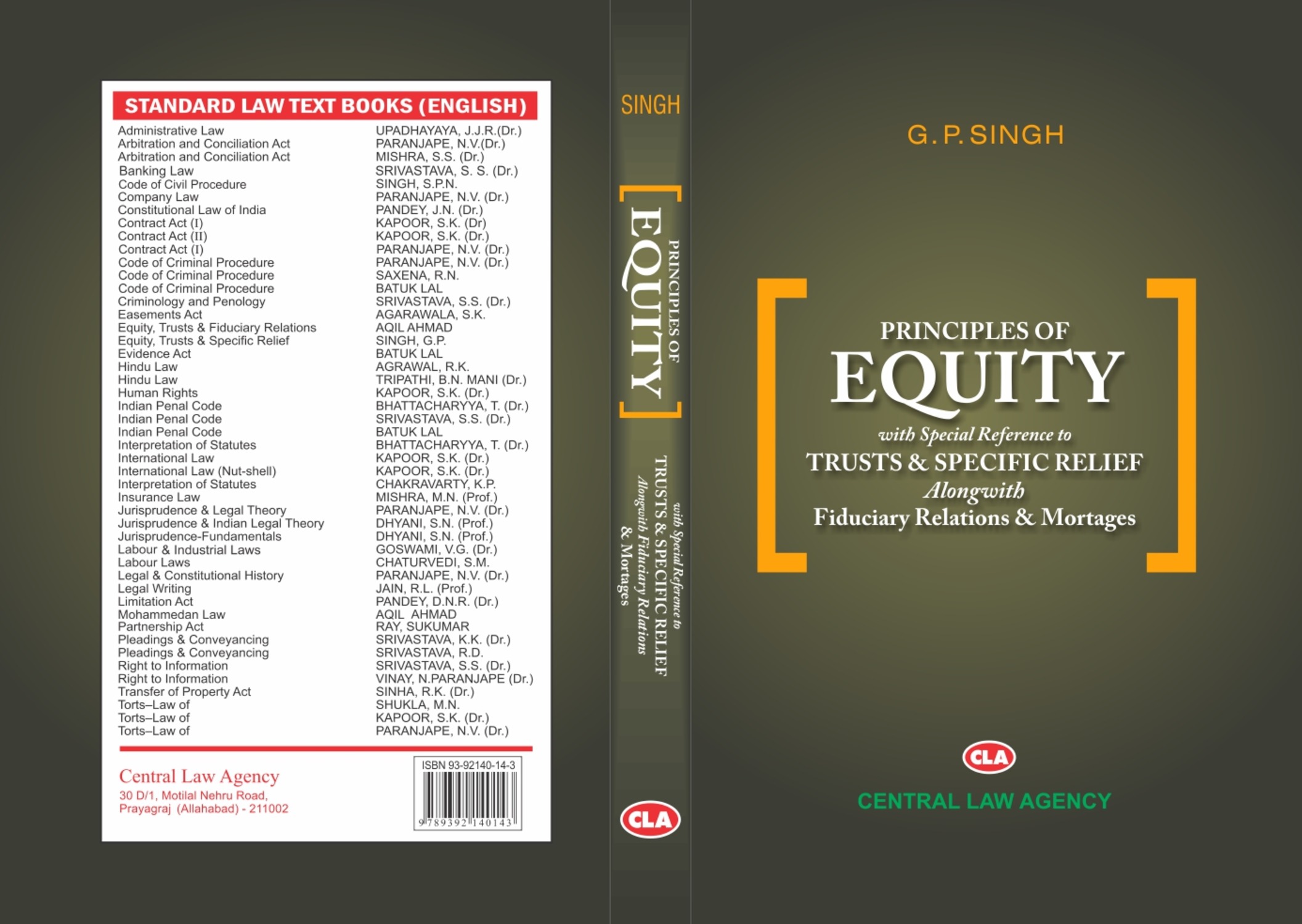
Principles of Equity with Special Reference

Author:

480.00

This book offers a comprehensive study of three important branches of law—Equity, Trusts, and the Specific Relief Act, 1963. It combines historical development, doctrinal principles, statutory provisions, and judicial interpretation to present a well-rounded understanding, making it a valuable resource for students, aspirants, academicians, and practitioners.

This book offers a comprehensive study of three important branches of law—Equity, Trusts, and the Specific Relief Act, 1963. It combines historical development, doctrinal principles, statutory provisions, and judicial interpretation to present a well-rounded understanding, making it a valuable resource for students, aspirants, academicians, and practitioners.

\\\\\\\"यह पुस्तक कानून की तीन महत्वपूर्ण शाखाओं—साम्या (Equity), न्यास (Trusts) और विनिर्दिष्ट अनुतोष अधिनियम, 1963 का एक व्यापक अध्ययन प्रदान करती है। यह ऐतिहासिक विकास, सैद्धांतिक सिद्धांतों, वैधानिक प्रावधानों और न्यायिक व्याख्याओं को मिलाकर एक समग्र समझ प्रस्तुत करती है, जो इसे छात्रों, शोधकर्ताओं और अधिवक्ताओं के लिए एक मूल्यवान संसाधन बनाती है।

Guarantee Safe & Secure Checkout

Description

This book offers a comprehensive study of three important branches of law—Equity, Trusts, and the Specific Relief Act, 1963. It combines historical development, doctrinal principles, statutory provisions, and judicial interpretation to present a well-rounded understanding, making it a valuable resource for students, aspirants, academicians, and practitioners.

The first part introduces the concept of equity, tracing its origins in Roman, English, and Indian legal systems. It explains the growth of equitable jurisdiction in England, its fusion with common law under the Judicature Acts, and its influence on Indian jurisprudence. A major portion is devoted to the maxims of equity, such as “equity will not suffer a wrong without a remedy” and “he who comes to equity must come with clean hands,” illustrating their application in Indian law. Other chapters cover equitable rights and interests, penalties and forfeitures, mortgages, liens, and doctrines relating to conversion, election, performance, satisfaction, and ademption. The book also examines equity’s role in protecting vulnerable groups such as married women, infants, and persons of unsound mind.

The second part focuses on the law of trusts, beginning with the historical evolution of trusts in Roman and English law and their adaptation into Indian statutes like the Indian Trusts Act, 1882, and the Charitable and Religious Trusts Act, 1920. It discusses the nature, creation, and classification of trusts, duties and liabilities of trustees, their powers and disabilities, and the rights and remedies of beneficiaries. Special attention is given to charitable trusts, the doctrine of cy pres, fiduciary relations, and the grounds for extinction or revocation of trusts.

The final part is devoted to the Specific Relief Act, 1963, which provides equitable remedies in Indian law. It explains the nature and scope of equitable reliefs such as recovery of property, specific performance of contracts, injunctions, declaratory decrees, rectification, rescission, and cancellation of instruments. The principles underlying the grant or refusal of these remedies are clarified with reference to statutory provisions and case law.

Written in a clear and practical style, the book balances theoretical foundations with practical application. By integrating history, doctrines, statutes, and judicial trends, it provides both conceptual clarity and applied knowledge.

This makes Equity, Trust and the Specific Relief Act an indispensable resource for academic study, competitive examinations, and professional practice in civil and commercial law.
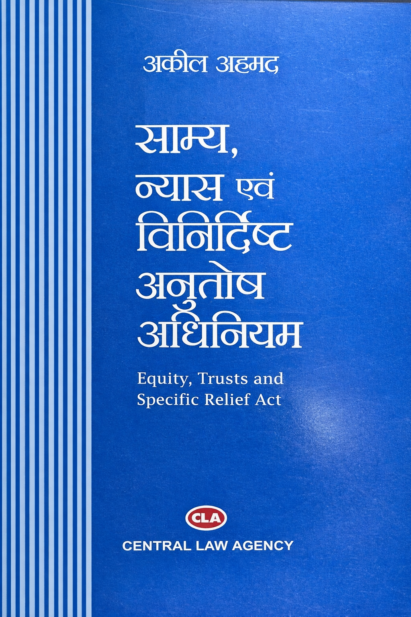
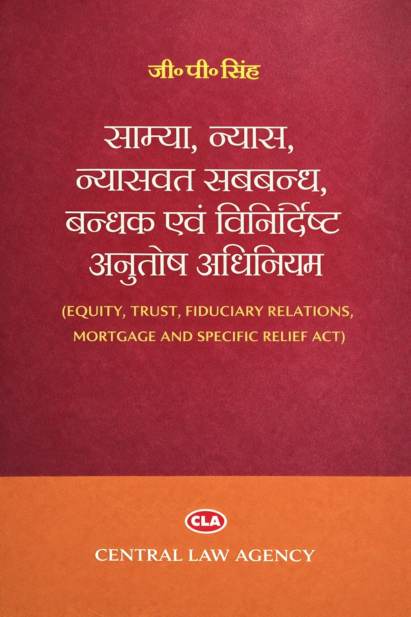
\\\\\\\"यह पुस्तक कानून की तीन महत्वपूर्ण शाखाओं—साम्या (Equity), न्यास (Trusts) और विनिर्दिष्ट अनुतोष अधिनियम, 1963 का एक व्यापक अध्ययन प्रदान करती है। यह ऐतिहासिक विकास, सैद्धांतिक सिद्धांतों, वैधानिक प्रावधानों और न्यायिक व्याख्याओं को मिलाकर एक समग्र समझ प्रस्तुत करती है, जो इसे छात्रों, शोधकर्ताओं और अधिवक्ताओं के लिए एक मूल्यवान संसाधन बनाती है।

1. साम्या (Equity)
पहला भाग साम्या की अवधारणा का परिचय देता है, जिसमें रोमन, अंग्रेजी और भारतीय कानूनी प्रणालियों में इसकी उत्पत्ति को रेखांकित किया गया है। यह इंग्लैंड में साम्यिक क्षेत्राधिकार के विकास, \\\\\\\'जूडिकेचर एक्ट्स\\\\\\\' के तहत कॉमन लॉ के साथ इसके विलय और भारतीय न्यायशास्त्र पर इसके प्रभाव की व्याख्या करता है।

साम्या के सूत्र (Maxims of Equity): पुस्तक का एक बड़ा हिस्सा साम्या के सूत्रों के लिए समर्पित है, जैसे \\\\\\\"\\\\\\\"साम्या किसी भी दोष को बिना उपचार के नहीं रहने देगी\\\\\\\"\\\\\\\" और \\\\\\\"\\\\\\\"जो साम्या के लिए आता है, उसे साफ हाथों से आना चाहिए।\\\\\\\"\\\\\\\"

प्रमुख सिद्धांत: इसमें बंधक (Mortgages), धारणाधिकार (Liens), और रूपांतरण (Conversion), निर्वाचन (Election), निष्पादन (Performance) और परितोष (Satisfaction) से संबंधित सिद्धांतों को शामिल किया गया है।

संरक्षण: यह विवाहित महिलाओं, अवयस्कों और अस्वस्थ मस्तिष्क वाले व्यक्तियों जैसे कमजोर समूहों की रक्षा में साम्या की भूमिका का भी परीक्षण करता है।

2. न्यास (Trusts)
दूसरा भाग न्यास के कानून पर केंद्रित है, जो रोमन और अंग्रेजी कानून में इसके ऐतिहासिक विकास और भारतीय न्यास अधिनियम, 1882 तथा परमार्थ एवं धार्मिक न्यास अधिनियम, 1920 जैसे भारतीय कानूनों में इसके अनुकूलन से शुरू होता है।

न्यास का स्वरूप: यह न्यास की प्रकृति, निर्माण और वर्गीकरण पर चर्चा करता है।

न्यासियों के कर्तव्य और शक्तियां: इसमें न्यासियों (Trustees) के कर्तव्यों, दायित्वों, शक्तियों और उनकी सीमाओं के साथ-साथ लाभार्थियों (Beneficiaries) के अधिकारों और उपचारों का विवरण दिया गया है।

विशेष अवधारणाएं: परोपकारी न्यास, \\\\\\\'साई-प्रे\\\\\\\' का सिद्धांत (Doctrine of Cy Pres), वैश्वासिक संबंध (Fiduciary relations) और न्यास की समाप्ति या निरसन के आधारों पर विशेष ध्यान दिया गया है।

3. विनिर्दिष्ट अनुतोष अधिनियम, 1963 (Specific Relief Act)
अंतिम भाग विनिर्दिष्ट अनुतोष अधिनियम, 1963 को समर्पित है, जो भारतीय कानून में साम्यिक उपचार (Equitable Remedies) प्रदान करता है।

उपचार के प्रकार: यह संपत्ति की वसूली, अनुबंधों का विनिर्दिष्ट पालन (Specific Performance), व्यादेश (Injunctions), घोषणात्मक डिक्री, लेखपत्रों के परिशोधन (Rectification), विखंडन और रद्दीकरण जैसे उपचारों की व्याख्या करता है।

न्यायिक विवेकाधिकार: इन उपचारों को देने या अस्वीकार करने के पीछे के सिद्धांतों को वैधानिक प्रावधानों और निर्णयज विधि (Case Law) के संदर्भ में स्पष्ट किया गया है।

निष्कर्ष: स्पष्ट और व्यावहारिक शैली में लिखी गई यह पुस्तक सैद्धांतिक आधार और व्यावहारिक अनुप्रयोग के बीच संतुलन बनाती है। इतिहास, सिद्धांतों, कानूनों और न्यायिक रुझानों को एकीकृत करके, यह सिविल और वाणिज्यिक कानून में शैक्षणिक अध्ययन और व्यावसायिक अभ्यास के लिए एक अनिवार्य संसाधन के रूप में कार्य करती है।\\\\\\\"

Reviews

There are no reviews yet.

Be the first to review “Principles of Equity with Special Reference”

Your email address will not be published. Required fields are marked *

Principles of Equity with Special Reference
You're viewing: Principles of Equity with Special Reference 480.00
Add to cart
Select the fields to be shown. Others will be hidden. Drag and drop to rearrange the order.
  • Image
  • SKU
  • Rating
  • Price
  • Stock
  • Availability
  • Add to cart
  • Description
  • Content
  • Weight
  • Dimensions
  • Additional information
Click outside to hide the comparison bar
Compare